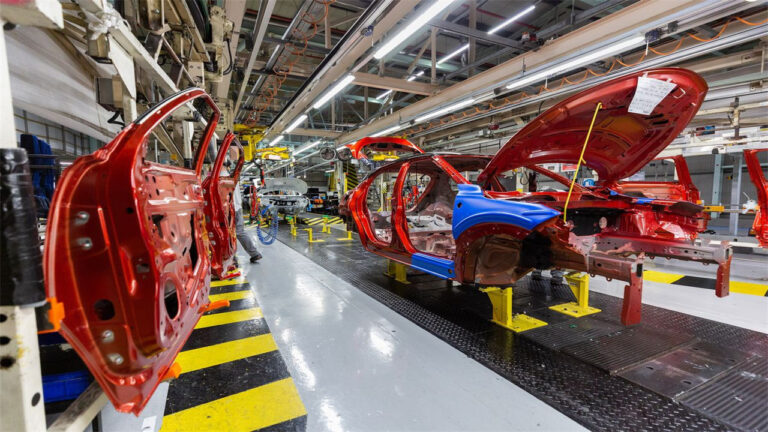
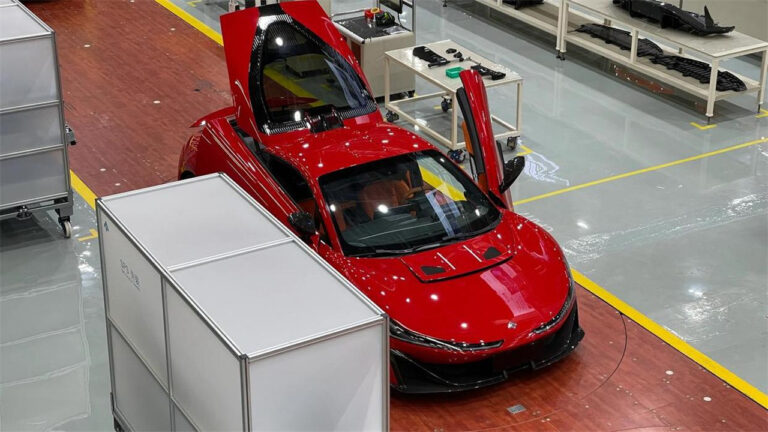
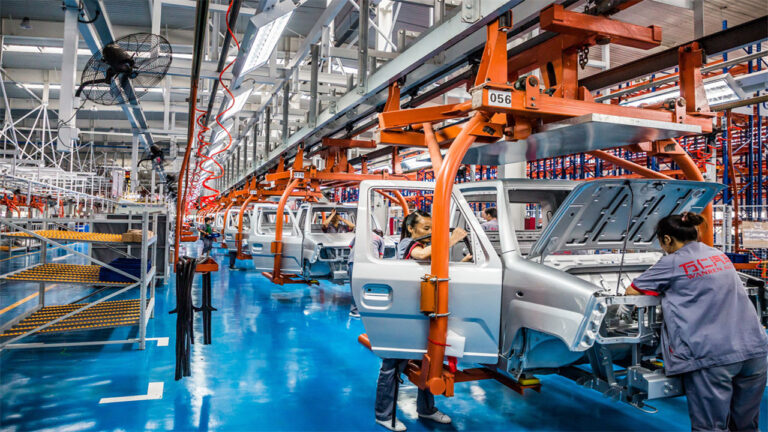
What types of vehicles can an automotive production line produce?—Flexible Automotive Production Line

Automobile Production Lines/Assembly Lines are Suitable to Assemble/Produce 4 wheelers, Cars, Sedans, SUVs, Automobiles, EVs and so on.(Sometimes, suitable for Pickups production.)
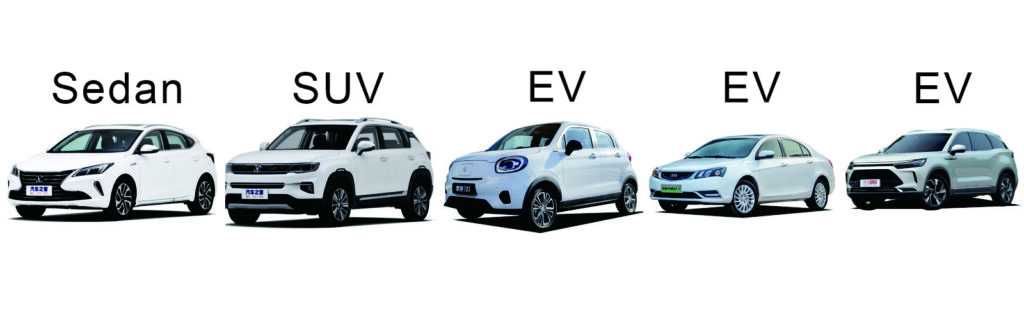
Contemporary automotive production systems have broken through the limitations of traditional single-model production modes, demonstrating remarkable adaptability.
Overall, modern production lines possess the capability to manufacture diverse vehicle models, with their core advantage stemming from the deep application of “flexibility” and “platformization.”
The following provides a detailed analysis from different dimensions:
1. Classification of Production Line Flexibility Levels
Highly Flexible Production Lines (Industry Mainstream)
As the standard configuration of modern automotive manufacturing bases, this mixed-model production approach features the following characteristics:
Compatible Vehicle Categories:
- Multiple Models on the Same Platform
- Typical Example: A modular platform can simultaneously produce vehicles of different segments, such as compact hatchbacks, urban SUVs, and luxury sedans
- Technical Basis: Shared chassis architecture, powertrain systems, and electrical/electronic architecture enable flexible combination of different body styles and sizes
- Multiple Body Styles
- Production Instance: A single production line can sequentially complete the assembly of sedans, SUVs, MPVs, and even sports cars
- Implementation Method: Relying on programmable automation equipment, self-adaptive positioning fixtures, and smart identification systems to achieve rapid process switching
- Multiple Powertrain Configurations
- Production Practice: Based on the same body architecture, it can adapt to different powertrain systems including traditional internal combustion engine, hybrid, and all-electric
- Process Characteristics: During final assembly, corresponding powertrain units, energy storage systems, or fuel systems are installed according to the power configuration
- Cross-Brand Platform Sharing
- Typical Case: The same platform can derive models for multiple brands with different positioning
- Enabling Condition: The universality of core platform technology provides the technical feasibility for multi-brand co-production

Dedicated Production Lines (Specific Application Scenarios)
Such production lines focus on specific products and have the following characteristics:
- Main Application Areas:
- Mass production of single high-volume best-selling models
- Commercial vehicles and specialized vehicles with unique structural configurations
2. Key Determinants of Production Line Model Compatibility
- Fundamental Technical Architecture
- This is the most fundamental constraint. Production lines between different technical architectures are generally incompatible, as the fundamental architecture determines the core characteristics and process requirements of the product.
- Physical Dimension Tolerances
- Tooling equipment, automation systems, and material handling systems on the production line all have inherent physical limitations. Each production line has its applicable dimensional specification range, and models exceeding this range cannot be produced normally.
- Manufacturing System Planning
- The flexibility level of a production line directly reflects the advancement of the manufacturing system. Highly flexible production lines require advanced automation equipment, complex logistics management systems, and intelligent production control software, with correspondingly higher investment costs.

Summary
The production capabilities of modern automotive production lines can be summarized by the following characteristics:
- Technical Foundation: Based on a unified fundamental architecture
- Product Coverage: Capable of adapting to multiple body styles and specifications
- Powertrain Compatibility: Supports power systems of different energy types
- Brand Extension: Enables multi-brand production within the same technological system
Modern automotive manufacturing bases can often efficiently conduct mixed production of models with different positioning, specifications, and even brands on a single production line. This capability for flexible mixed-model manufacturing has become a crucial indicator for measuring the core competitiveness of automotive manufacturers.