What benefits can the ATV Final Assembly Line bring to ATV production?—ATV Production Line Fabrication Factory
The ATV final assembly line is the core of a modern manufacturing system, and it brings comprehensive and transformative benefits to the factory, going far beyond simply “assembling parts.”
The key benefits the assembly line brings to the factory can be summarized in five main areas:
1. A Leap in Efficiency and Production Capacity
- Takt-Based Production: The complex assembly process is broken down into a series of simple station operations, each completed within a fixed time. This creates a stable, predictable production rhythm, like a well-orchestrated symphony, greatly increasing production speed.
- Parallel Operations: Unlike stationary assembly, the flow line allows different stations to perform different tasks simultaneously, significantly shortening the assembly cycle time per vehicle.
- Waste Reduction: The line-side material supply system delivers parts directly to the workers’ hands, minimizing time spent searching, moving, and handling parts, allowing them to focus on value-added work.
The Result: The factory can achieve mass production, respond quickly to market demand, and dramatically reduce labor costs per unit.
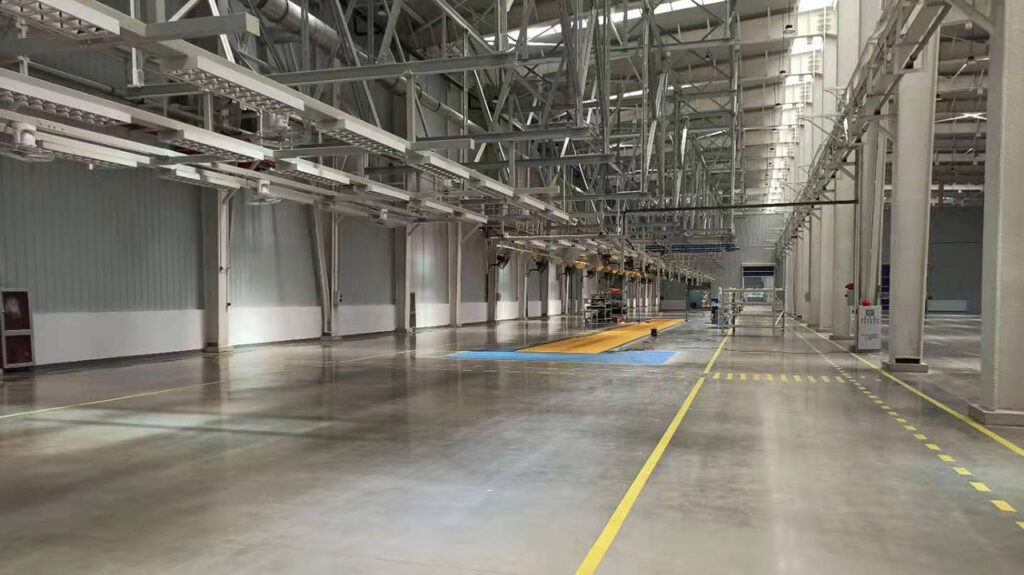
2. Consistency and Control of Product Quality
- Standardized Work: Each station has clear work instructions, ensuring every worker performs operations the same correct way, eliminating human variation.
- Error Proofing: The use of specialized tools like torque wrenches ensures consistent tightening of critical fasteners; mistake-proofing designs (e.g., unique connectors, color-coding) prevent incorrect part installation.
- In-Line Quality Inspection: Quality checks are embedded after each critical station (known as “quality gates”). Problems can be detected and resolved as they occur, preventing defects from accumulating until the final stage, which greatly reduces expensive rework costs.
The Result: Extremely consistent quality in finished products. Every ATV meets the same high standard, enhancing brand reputation and customer satisfaction.
3. Significant Reduction in Production Costs
- Reduced Reliance on Highly Skilled Workers: Decomposing complex processes simplifies operations at individual stations, lowering training costs and time, and reducing dependence on all-around skilled technicians.
- Optimized Space Utilization: The flow line layout is more compact than stationary assembly, achieving higher floor space efficiency.
- Reduced Work-in-Process Inventory: The flow line accelerates material movement, shortening the time frames and components spend on the line, reducing capital tied up in inventory.
The Result: The factory can effectively control the manufacturing cost per unit while ensuring quality, thereby enhancing product competitiveness in the market.
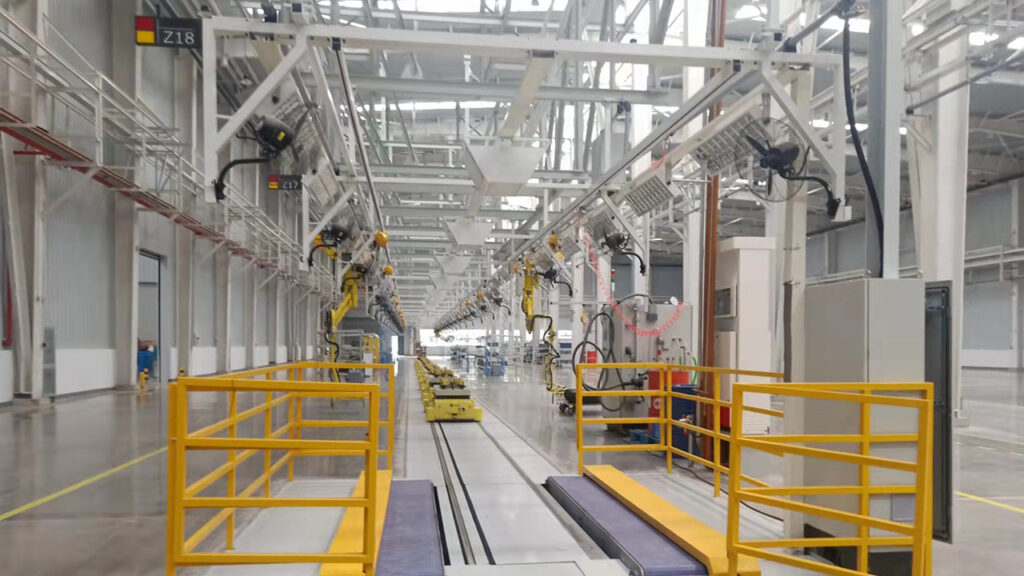
4. Refined and Visualized Production Management
- Clear Status Visibility: Managers can clearly see the production line’s operational status, current output, bottleneck stations, and more.
- Data-Driven Decision Making: Integration with a Manufacturing Execution System (MES) allows for the collection of operational and quality data from each station, providing a scientific basis for process optimization and efficiency improvements.
- Complete Traceability: Through the Vehicle Identification Number (VIN), the source of components, assembly personnel, and inspection data for each vehicle can be traced, facilitating quality investigations and recall management.
The Result: Factory management shifts from “relying on experience” to “relying on data,” achieving scientific and refined production management.
5. Enhanced Production Flexibility
- Mixed-Model Production: Modern assembly lines (especially flexible lines using AGVs) can produce different ATV models and configurations on the same line, allowing for flexible switching based on orders.
- Rapid Response to Change: When launching new models, only specific stations need modification, without rebuilding the entire production line, significantly shortening the product iteration cycle.
The Result: The factory can quickly respond to diverse customer needs and changing market trends.


