What are the characteristics of an SKD automotive production line?—SKD Production Line Manufacturer

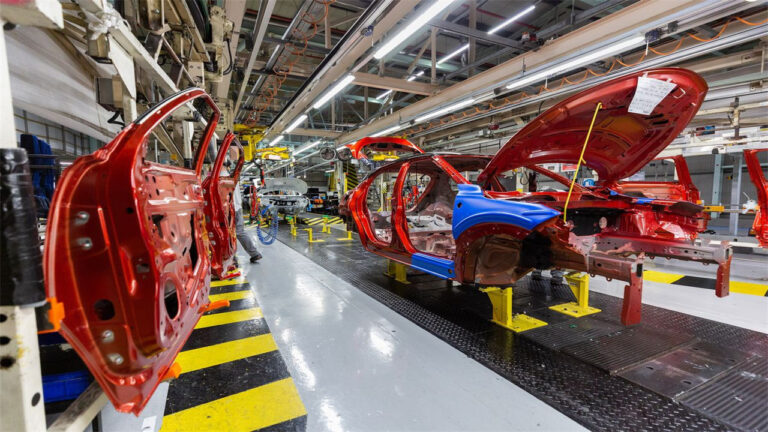
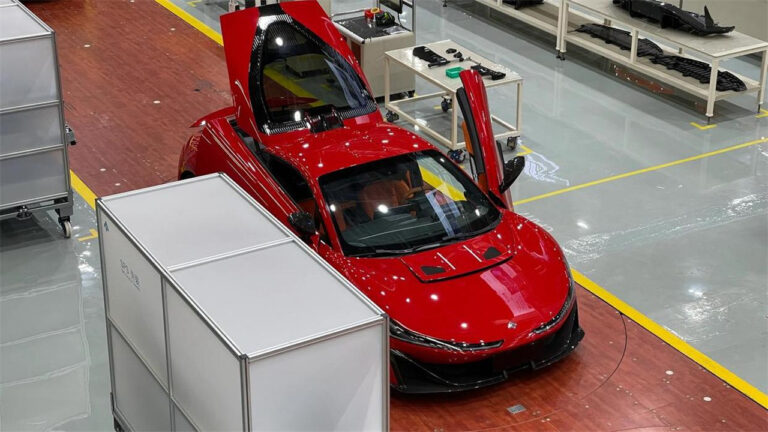
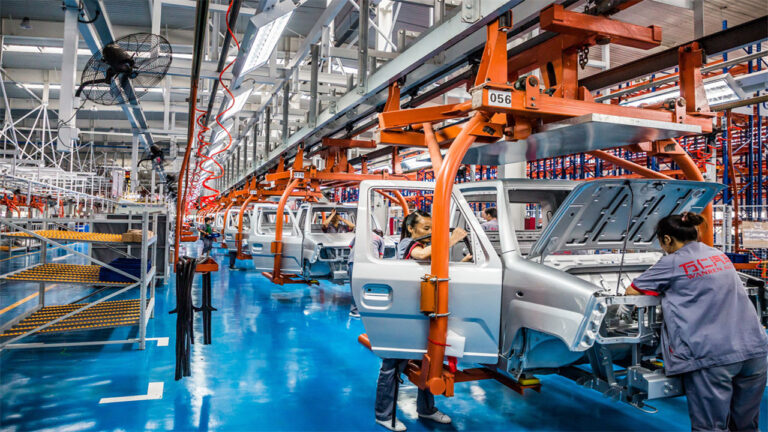
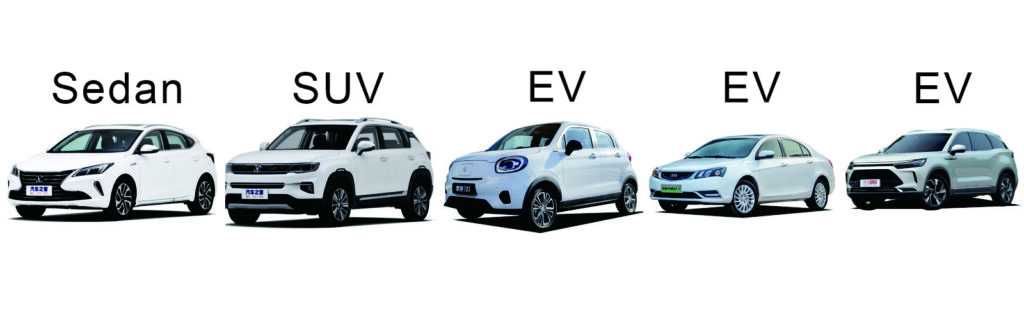
Automobile Production Lines/Assembly Lines are Suitable to Assemble/Produce 4 wheelers, Cars, Sedans, SUVs, Automobiles, EVs and so on.(Sometimes, suitable for Pickups production.)
The SKD automotive production line represents a more elementary stage of vehicle manufacturing compared to CKD. Its core characteristics can be summarized as an “assembly model that is fast, low-investment, and low-complexity.”
Here are the main features of an SKD production line, along with a comparison to CKD:
Core Characteristics of an SKD Production Line
- Assembly Units are Large Assemblies
- Definition: SKD stands for “Semi-Knocked Down.” The vehicle is disassembled into several large assembly modules, such as:
- A complete body (already welded and painted)
- A complete chassis (including engine, transmission, suspension system)
- Complete interior packs like the instrument panel, seats, doors, etc.
- Production Process: The task of the local factory is very simple, primarily involving joining these large assemblies together like “building blocks,” making connections, and performing basic debugging. It does not involve complex welding or painting processes.
- Definition: SKD stands for “Semi-Knocked Down.” The vehicle is disassembled into several large assembly modules, such as:
- Extremely Fast Setup and Very Low Investment
- Low Technical Barrier: No need for expensive welding robots, paint shops, or complex wastewater treatment systems. Only basic assembly tools, lifting equipment, and a simple marriage line are required.
- Short Cycle Time: The time required from factory site selection to production line launch is very short, enabling rapid localization of product supply.
- Simple Operations, Low Skill Requirements for Workers
- Since the assembly process is greatly simplified, professional welders or painters are not needed. Workers can start after short-term training, primarily performing mechanical connections, wiring harness connections, and fluid refilling.
- Relatively Easier Quality Control
- Core manufacturing processes (like body welding and painting) are completed at the parent plant, ensuring consistency in body structure and exterior quality. The local factory mainly controls assembly quality, making management difficulty and risk much lower than CKD.
- Very Simple Supply Chain Management
- Only need to manage the import and inventory of a few large assemblies. The complexity of logistics coordination and inventory management is far lower than the CKD model, which requires managing thousands of individual parts.

Summary and Application Scenarios
The essence of an SKD production line is a “quick-start solution.” It is suitable for the following situations:
- Testing New Markets: Enter a new market with uncertain size at the lowest cost and highest speed.
- Small Volume Production: Used for producing niche models or commercial special vehicles where investing in a CKD line is not justified.
- Circumventing CBU Import Restrictions: Serve as a workaround in countries that prohibit complete built-up unit imports but allow the import of large assemblies.
- Political or Emergency Needs: To quickly meet government requirements or address sudden supply chain disruptions.
In summary, with its “short timeline, low complexity, and fast results” characteristics, the SKD production line serves as a flexible and practical tool for automakers pursuing specific strategic objectives.