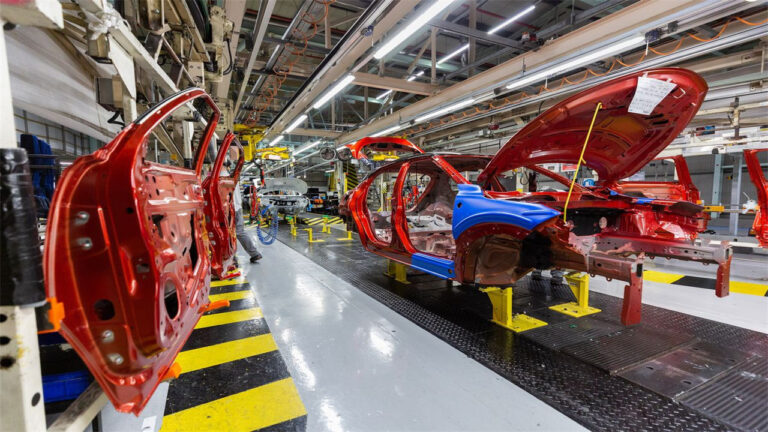
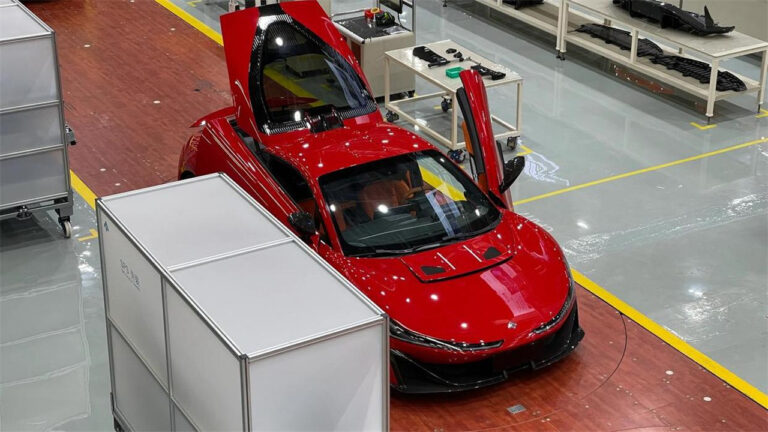
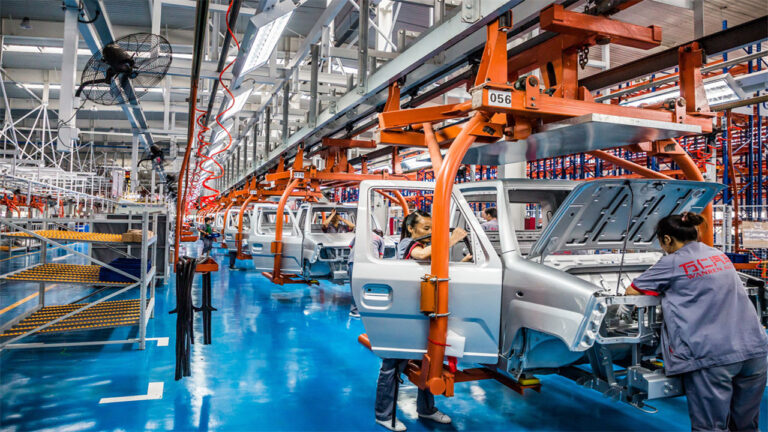
What are the characteristics of an automobile production line?—Sedan Production Line

Automobile Production Lines/Assembly Lines are Suitable to Assemble/Produce 4 wheelers, Cars, Sedans, SUVs, Automobiles, EVs and so on.(Sometimes, suitable for Pickups production.)
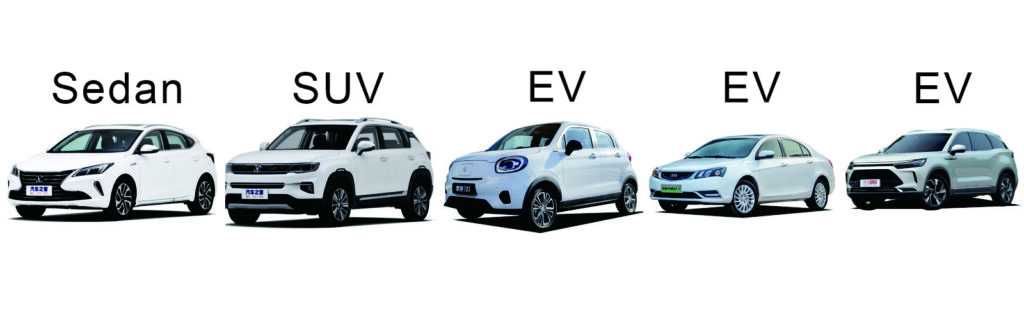
Modern automobile production lines, in particular, are complex systems that integrate a high degree of automation, precise logistics, and advanced management concepts. They have the following core characteristics:
1. High Automation and Robotics
- Widespread use of industrial robots: Robots have largely replaced humans in repetitive, high-precision, or hazardous tasks such as welding, painting, and stamping. They ensure consistent quality and extremely high production efficiency.
- Automated conveying systems: AGVs (Automated Guided Vehicles), EMS (Electric Monorail Systems), etc., automatically transport car bodies and components between different workstations, enabling seamless production.
- Automated assembly and tightening: The installation of key components (such as engines, chassis, tires) and bolt tightening are performed by automated equipment, which records data in real-time to ensure accuracy and enable quality traceability.
2. Standardization and Lean Production
- Assembly line operation: This is the foundation of automobile production. The vehicle is broken down into hundreds of processes, with each station performing only specific, standardized operations, greatly improving specialization and production efficiency.
- Takt time: The production line operates on a fixed “takt time” (e.g., 60 seconds), meaning a new car rolls off the line at regular intervals. The entire production system’s logistics, manpower, and equipment are coordinated around this cycle.
- One-piece flow: The goal is to keep the flow of parts and car bodies on the line as continuous as possible, reducing work-in-process inventory and waiting time, and quickly exposing and resolving problems.
3. Precise and Complex Logistics System
- Sequential parts supply: Suppliers must deliver components to the line in the exact sequence that the vehicles are being produced. This is crucial for parts that require personalized assembly (e.g., seats, dashboards).
- Just-in-Time (JIT) production: Through methods like Kanban and electronic orders, parts are delivered only when needed, in the exact quantity needed, minimizing inventory costs.
- Modular supply: Suppliers pre-assemble multiple parts into a single module (e.g., front-end module, door module). The production line then installs the entire module, simplifying the assembly process and improving efficiency.

4. High Flexibility and Customization Capability
- Mixed-model production: The same production line can simultaneously produce different models and configurations (e.g., SUVs, sedans, even different brands). This relies on precise vehicle identification systems (like RFID) and flexible automation equipment.
- Build-to-order: Modern automobile production is increasingly adopting a “build-to-order” model, where the production line can quickly respond to customers’ personalized configuration requests (e.g., color, engine type, interior trim).
5. Strict Quality Control System
- Full-process inspection: Quality checks are integrated into every step, from inspection of stamped parts and laser measurement of body dimensions to visual inspection during assembly and diagnostics of electronic control systems.
- Andon system: Any worker who discovers a problem can pull the “Andon cord” or press a button to stop the entire line, preventing defects from moving to the next stage, embodying the “quality first” principle.
- Data traceability: Key production data for each vehicle (e.g., welding parameters, tightening torque) is recorded and linked to its VIN, enabling full lifecycle quality traceability.

6. Technology-Intensive and Informatization
- Industrial Internet of Things (IIoT): Equipment, robots, and products on the line are interconnected, collecting and analyzing data in real-time for predictive maintenance, process optimization, and quality improvement.
- Digital twin: A digital model of the production line is created in a virtual world for simulation, debugging, and optimization before implementation in the physical factory, reducing downtime and trial-and-error costs.
- MES (Manufacturing Execution System): The MES acts as the “brain” of the production line, managing production orders, scheduling resources, monitoring production status, and collecting performance data.
7. Emphasis on Safety and Ergonomics
- Safety guards: Production lines are equipped with numerous light curtains, safety fences, emergency stop buttons, etc., to ensure safe interaction between personnel and automated equipment.
- Ergonomic design: For stations that still require manual operation, great consideration is given to reducing worker fatigue, using tools like balancers and adjustable work platforms to prevent occupational injuries.
In summary, a modern automobile production line is an efficient, precise, flexible, and intelligent manufacturing system. It is no longer a simple mechanical conveyor belt but a complex ecosystem that deeply integrates mechanical engineering, information technology, management science, and artificial intelligence. Its ultimate goal is to meet the increasingly diverse demands of the market at the lowest possible cost and highest speed, while ensuring the highest quality.