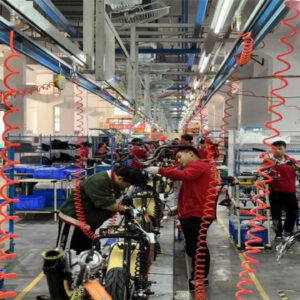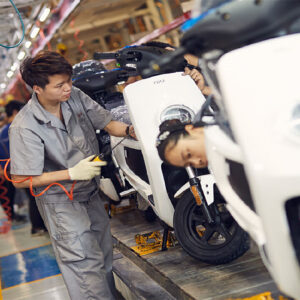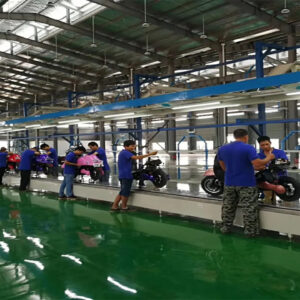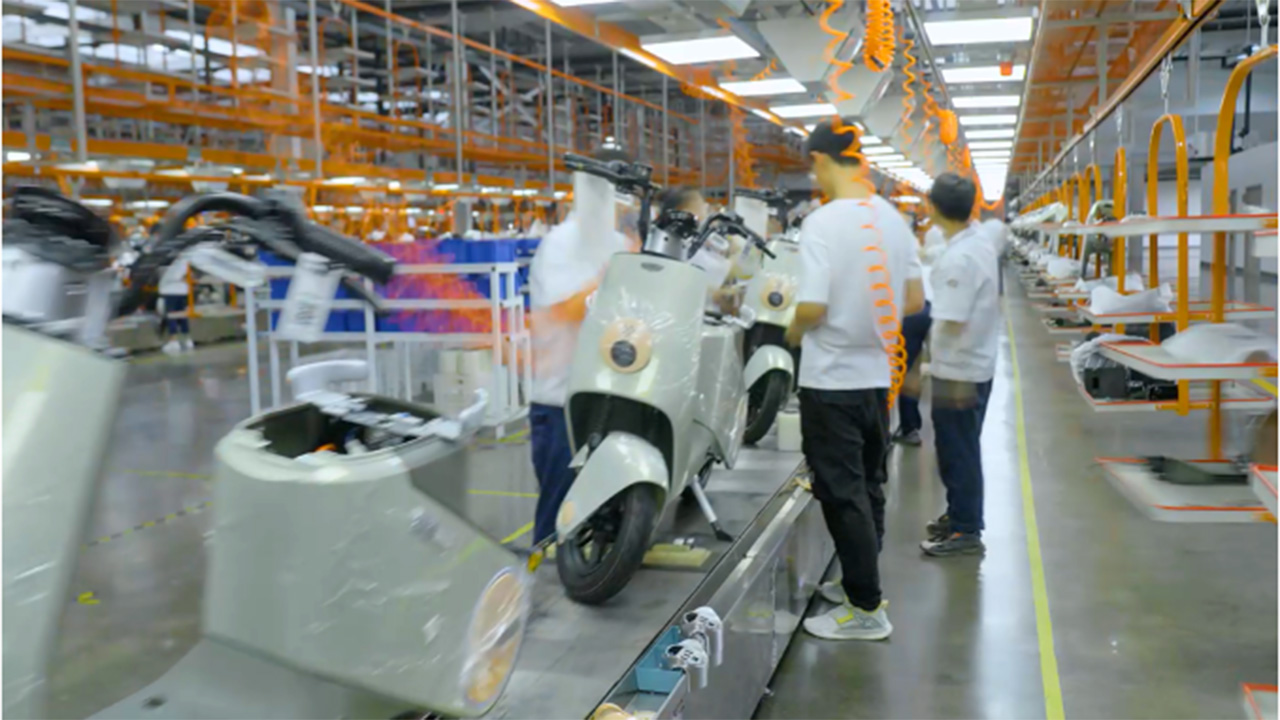
E-bike Assembly Line Design Plan and Manufacture —–E-scooter Assembly Line Fabricate
Description
E-bike Assembly Lines are Suitable to Assemble/Produce 2 wheel Motorcycles, 2 wheel Scooters, 2 wheel Electric-cycles, 2 wheel E-Bikes, Bicycles, and so on.
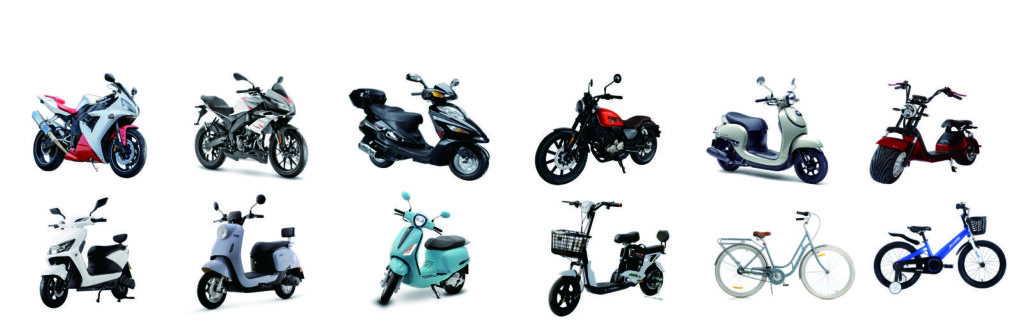
Design Plan for a Two-Wheel Electric Vehicle Assembly Line
I. Design Goals
1. Goals:
High Efficiency: Achieve the predetermined production takt time (e.g., one vehicle rolls off the line every X minutes).
High Quality: Ensure stable product quality through rational workstation design and quality inspection points.
High Flexibility: Capable of mixed-line production for different models (e.g., basic models, scooters, mopeds).
Ergonomics: Reduce operator labor intensity and comply with ergonomic principles.
Scalability: Allow room for future capacity expansion or technological upgrades.
II. Overall Assembly Line Layout and Process
Typical assembly lines use a “U-shaped” or straight-line layout. The “U-shaped” layout is preferred in modern lean manufacturing as it shortens material delivery paths and facilitates communication.
The final assembly process can be divided into four main stages:
1. Front Section: Body Frame Assembly
2. Middle Section: Powertrain and Running Gear Assembly
3. Rear Section: Exterior Trims and Functional Parts Assembly
4. Final Section: Testing and Packaging
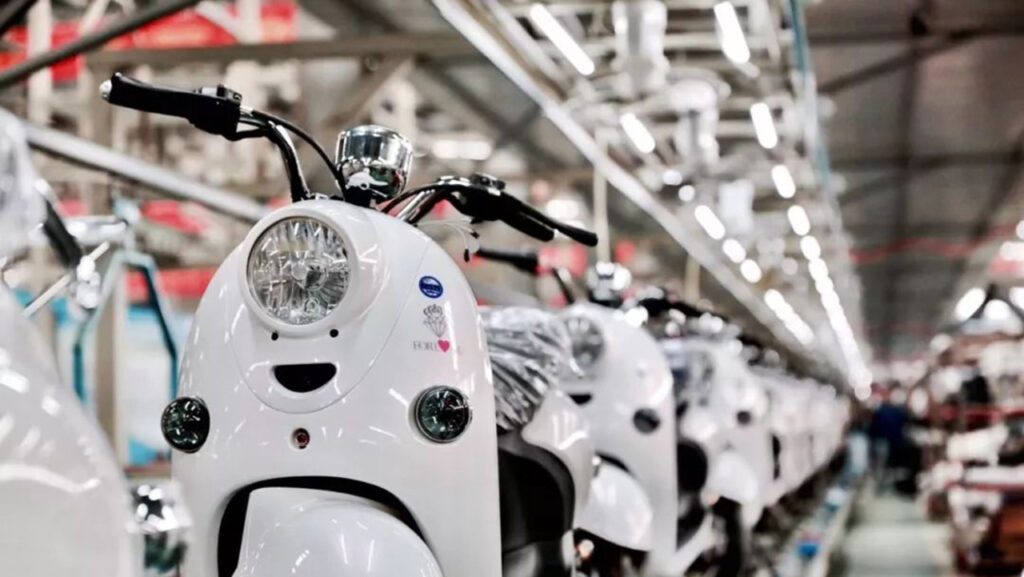
III. Line Type Selection and Equipment Configuration
1. Conveyor Type:
Floor-mounted Chain-on-Edge Conveyor: High load capacity, robust, suitable for heavy loads. Used mainly in front/middle sections.
Roller Conveyor/Belt Conveyor: Used in rear/final sections, allowing easy rotation of the vehicle for operation.
Consider “Friction Drive + Floor Track” systems, combining stability and flexibility, a trend in modern assembly lines.
2. Key Equipment:
Torque Tools: Ensure consistent bolt torque at critical points (wheels, handlebar, brakes).
Final Inspection Line: Automated testing of electrical functions, braking, lights, etc., with traceable data.
AGV/Tugger Train: For automated delivery of heavy items like batteries, wheels.
IV. Personnel and Management
1. Staffing: Typically one operator per workstation (“one person, one station”). Include a line leader and quality inspectors.
2. Training: Train all operators on Standardized Work Procedures (SWPs), especially safety rules and quality requirements.
3. Production Management Board: Use electronic or physical boards to display real-time information: production plan, takt time, output, quality alerts, etc., for visual management.