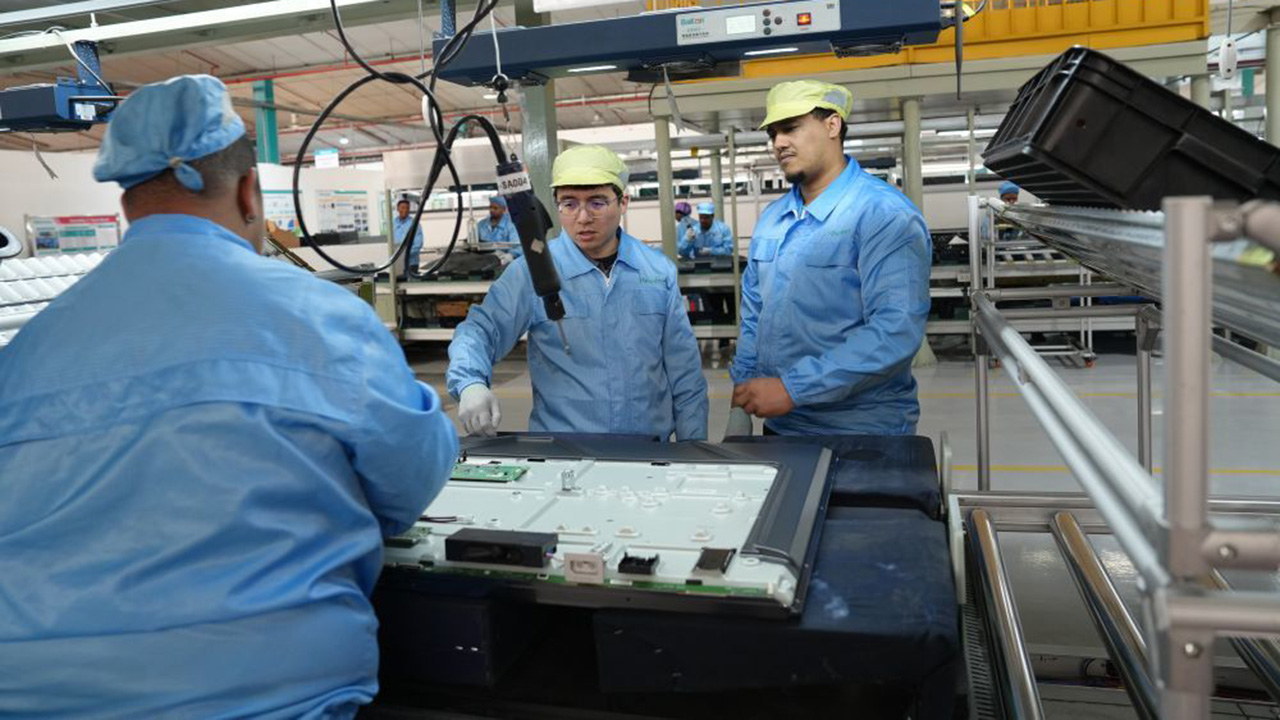
Automated Television Conveyor Manufacturer—TV Assembly Line Factory in China
Description
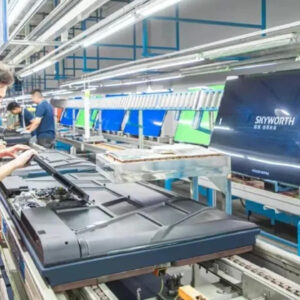
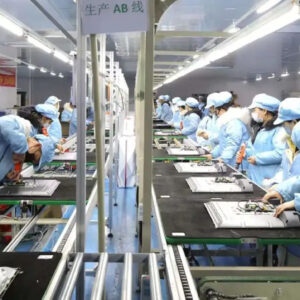
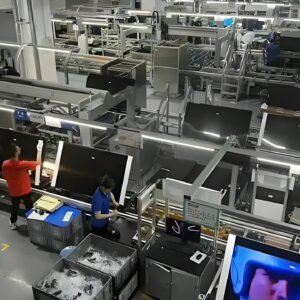
We are a professional manufacture of TV Assembly Line/TV Production Line solutions.
TV Assembly Lines/TV Production Lines are Suitable to Assemble/Produce following Televisions and TVs and so on.
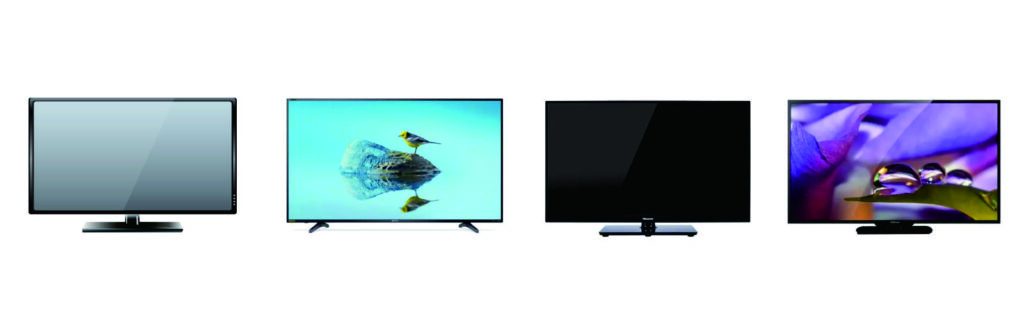
Television Conveyance Line/Conveyor
I. Core Design Requirements
1. Smoothness: Absolutely avoid impacts, vibrations, and sudden stops/starts to prevent damage to the fragile screen and internal components.
2. Flexibility: Must be capable of handling mixed-model production of televisions with various sizes and models.
3. Precise Positioning: At critical stations (e.g., robotic assembly, automatic screwdriving, testing), precise positioning is required, typically with repeatability accuracy within ±0.5mm.
4. Accumulation Capability: Needs to allow for brief accumulation or buffering between workstations with different cycle times (e.g., the aging test area with longer process times).
5. Ease of Automation Integration: The conveyor structure must facilitate easy interfacing and integration with robots, AGVs, and other automated equipment.
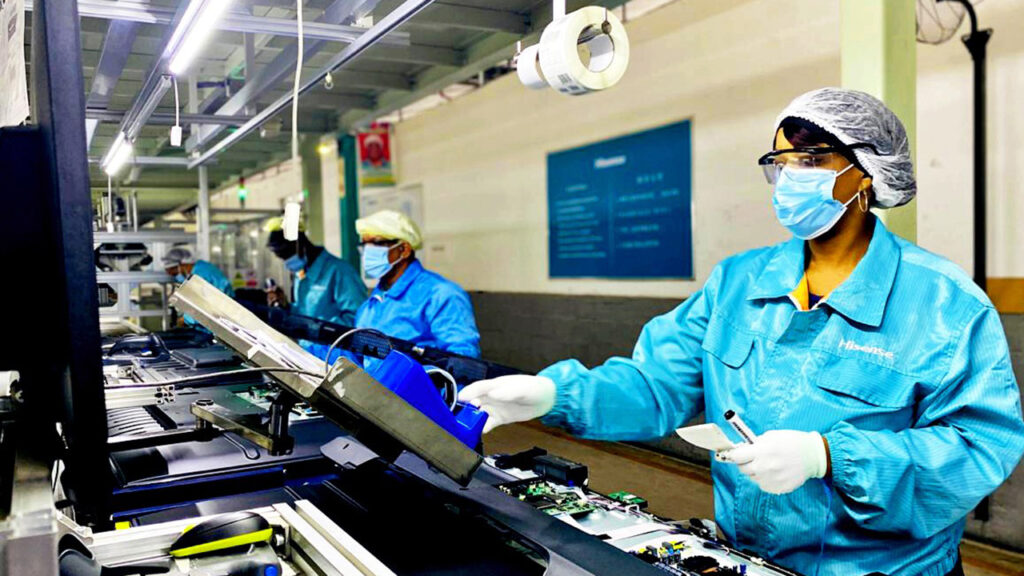
II. Key Technologies and Components
1. Drive Methods:
Motorized Roller Drive: Compact structure, easy maintenance, commonly used in roller conveyors.
Motor + Reducer Drive: Powerful, suitable for long-distance, heavy-load lines.
2. Positioning and Stopping Mechanisms:
Pneumatic Stoppers: Used to halt and release products at workstations.
Servo Positioning Units: Used at stations requiring precision for machine vision or robotic operations, achieving sub-millimeter accuracy.
3. Pallets/Fixtures:
Televisions are transported on dedicated pallets. These pallets serve to:
Protect the Product: Provide uniform support, preventing stress concentration on the TV base.
Provide Precision Datum: Feature standard locating holes, providing a unified coordinate system for robotic operations.
Carry Information: Can be fitted with RFID or QR code tags to carry product information, enabling traceability.
4. Control System Integration:
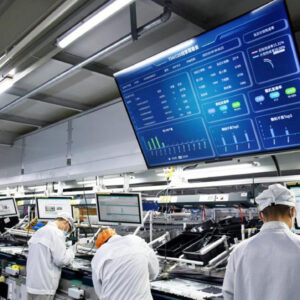
The conveyance line is controlled centrally by a PLC, integrated with the plant’s MES.
Sensors detect TV positions to automate functions like start/stop, diverting, and merging.