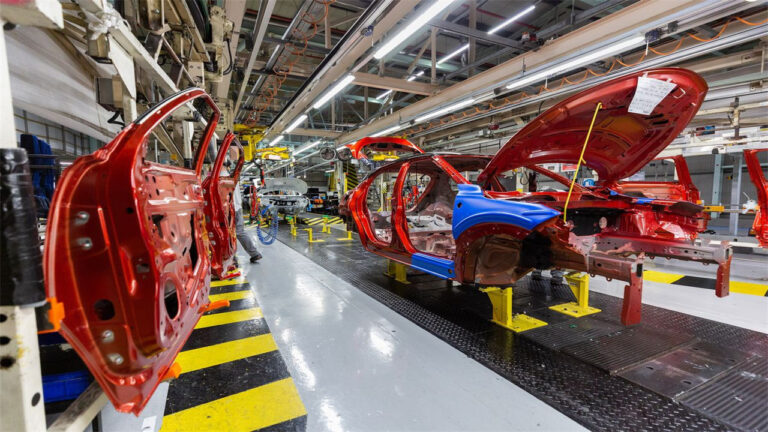
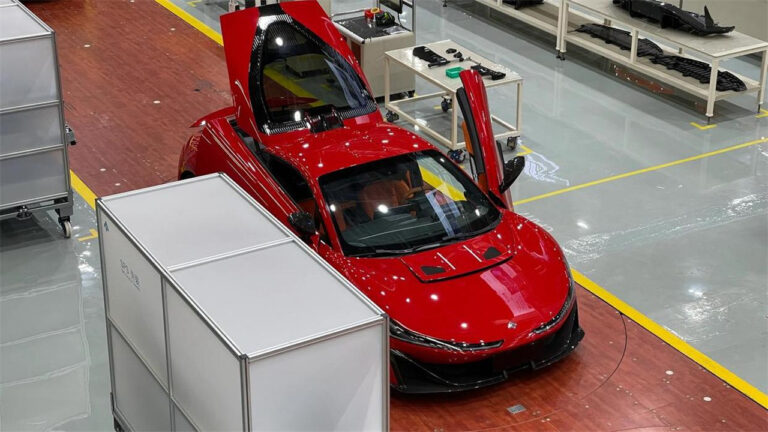
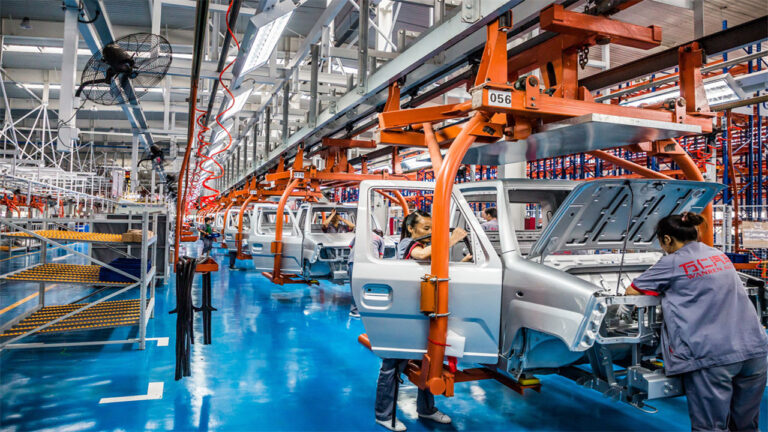
Characteristics of a Mixed-Production Line for SUVs and Sedans—SUV Production Line

Automobile Production Lines/Assembly Lines are Suitable to Assemble/Produce 4 wheelers, Cars, Sedans, SUVs, Automobiles, EVs and so on.(Sometimes, suitable for Pickups production.)
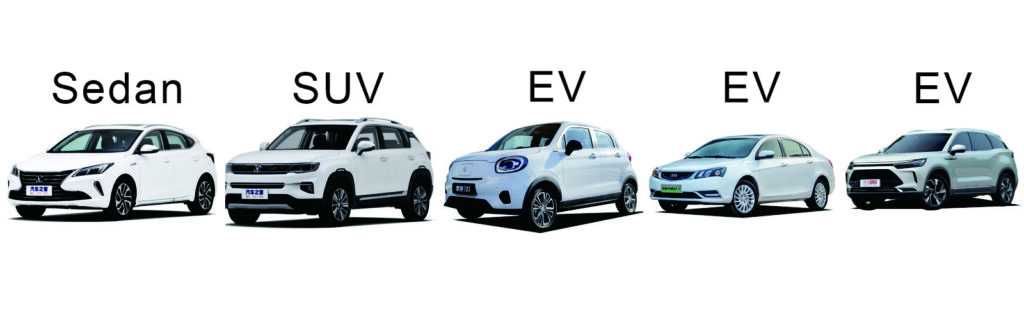
A mixed-production line for SUVs and sedans represents a highly complex and advanced manufacturing technology in the modern automotive industry. It exemplifies the highest level of flexibility, automation, and leanness achieved by automakers. This type of production line has the following core characteristics:
1. Extreme Flexibility and Modularity
This is the core of mixed-production. The line must be capable of producing different models in a “random” sequence.
- Body Identification System: Each body or carrier is equipped with an RFID chip or barcode. When a vehicle enters a workstation, the system automatically identifies the model (whether it’s an SUV or a sedan) and calls up the corresponding program for assembly.
- Programmable Automation Equipment:
- Welding Robots: Equipped with different welding program packages, they can automatically adjust welding gun angles and spot locations to adapt to different body structures and sheet metal thicknesses.
- Painting Robots: Can automatically adjust the spraying path based on the vehicle’s contour to ensure an even coat.
- Assembly Robots: For instance, robots installing sunroofs or windshields can automatically switch to the correct glass size and sealing application path.
- Modular Design and Supply: Components are designed as modules wherever possible. For example, even if an SUV and a sedan have different front ends, they might share a “front-end module” (including radiator, condenser, headlights, etc.), which is installed quickly as a single unit on the assembly line.
2. Complex Fixturing and Carrier Systems
This is the physical foundation for mixed-production, especially in the body shop (welding shop).
- “White Body” Fixtures: The fixtures used to hold the body for welding are no longer dedicated to a single model but are switchable, adjustable flexible fixtures. Driven by servo motors, the fixture’s locating pins can automatically move and clamp into predetermined positions based on the identified model, to securely hold the vastly different dimensions of an SUV or sedan body.
- Universal Carriers: On the final assembly line, the carriers that hold the vehicle body need to accommodate different wheelbases, track widths, and ground clearances. This is typically achieved through adjustable support points and clamping mechanisms.

3. Lean and Precise Logistics System
Mixed-production places extremely high demands on the accuracy of material delivery to avoid production chaos.
- Sequential Parts Supply: This is the most critical link. For parts strongly tied to the model, such as seats, dashboards, and bumpers, suppliers must deliver the correct parts (SUV or sedan) to the workstation in the exact sequence of the vehicles on the production line. Any error can cause the line to stop.
- Parts Kitting and Call-Ups: Workers in the material area need to pick parts for different models onto the correct material carts (or AGVs) based on system instructions, ensuring that workers at each station always pick up the correct parts needed for the current vehicle.
4. More Complex Production Planning and Sequencing
The production sequence directly impacts efficiency and logistics pressure.
- Mixed-Model Sequencing Strategy: Production control does not produce 50 SUVs in a row followed by 50 sedans. They employ intelligent mixed sequencing to:
- Balance Workload: Prevent a station from becoming overburdened by processing several complex models (e.g., SUVs with 4WD systems) in a row.
- Smooth Material Consumption: Avoid rapid depletion of specific part inventories, which stresses the logistics system.
- Maximize Efficiency: Optimize the production rhythm based on material and equipment capacity.

5. Higher Skill Requirements for Employees
- Multi-Skilling Training: Line workers must be familiar with the assembly processes, part numbers, and quality standards for both (or all) models. They need the ability to quickly identify the model and perform the correct operations.
- Error-Proofing Mechanisms: In addition to automation, workstations use visual management systems, such as pictures, indicator lights, or displays, to show the worker the required parts and tools for the current vehicle, preventing human error.
6. Increased Complexity in Quality Control
- Differentiated Inspection Standards: Since SUVs and sedans may differ in chassis, electronic systems, etc., their inspection parameters will also differ. For example, SUVs may require testing of 4WD systems and off-road modes, while sedans may focus more on road driving performance.
- Data Traceability: The quality traceability system must clearly record all key data for each vehicle (whether SUV or sedan) during its production process, ensuring any issues can be traced back to their source.
In Summary:
A mixed-production line for SUVs and sedans is a massive systemic engineering feat. It is not merely the physical merging of two lines but the ultimate test of the entire production system, supply chain management, and level of informatization. Its core advantages are:
- Rapid Response to Market: Allows flexible adjustment of the production ratio between SUVs and sedans based on market demand changes.
- Reduced Investment Costs: Eliminates the need to build dedicated factories for single models, significantly saving on land, equipment, and capital investment.
- Improved Resource Utilization: Sharing factory space, infrastructure, and human resources increases overall efficiency.
Therefore, this type of production line is the mainstream and benchmark production method adopted by global major automakers to cope with product diversification, market fluctuations, and cost pressures.