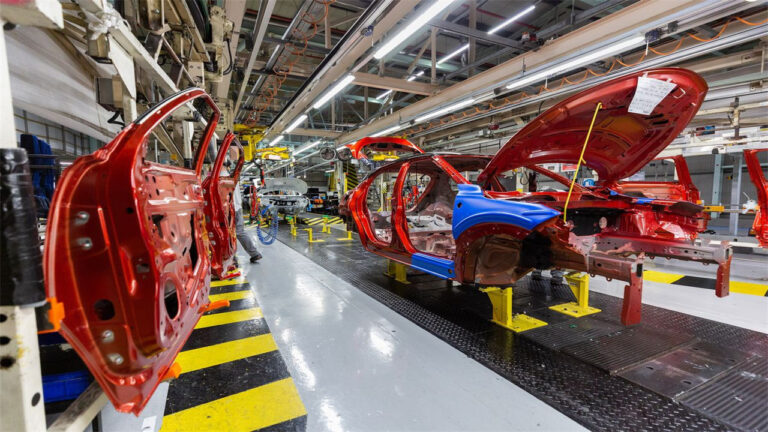
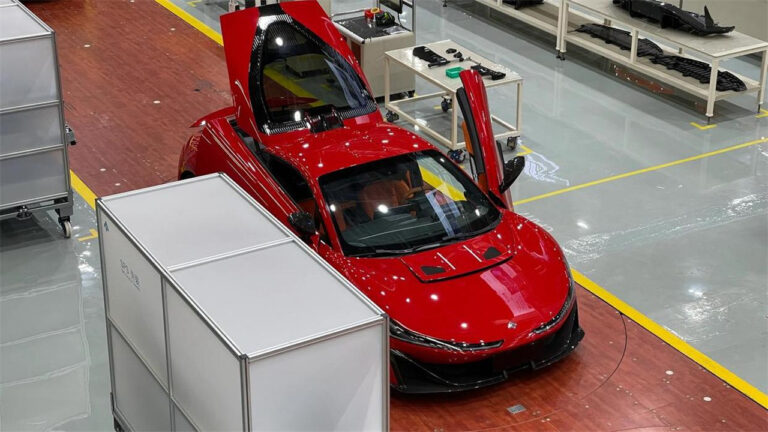
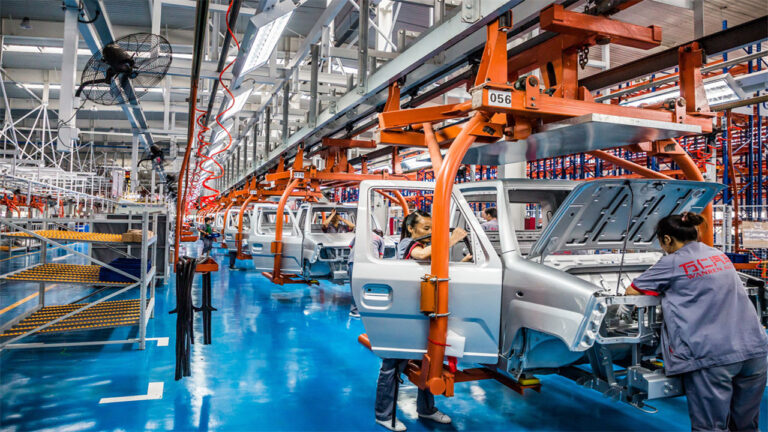
Automotive Production Line Factory Suggestion: How Purchasers Choose Between a CKD and an SKD Automotive Production Line?

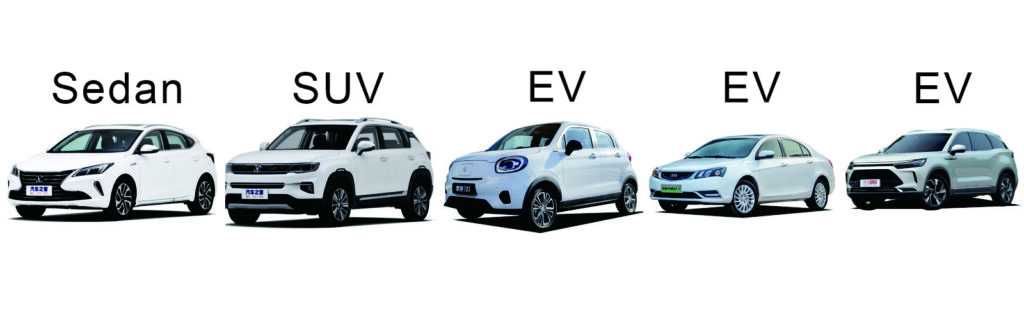
Automobile Production Lines/Assembly Lines are Suitable to Assemble/Produce 4 wheelers, Cars, Sedans, SUVs, Automobiles, EVs and so on.(Sometimes, suitable for Pickups production.)
A purchaser’s decision between CKD and SKD models ultimately involves a trade-off between investment cost, localization policies, market strategy, and production capability. Below is a detailed analysis of the specific decision-making criteria and a comparative evaluation.
Core Decision-Making Framework
1. Policy and Regulatory Requirements
- When to Choose CKD:
- The region has stringent localization rate requirements (typically requiring 30%-50% or more).
- The government offers incentives like tariff reductions for importing knocked-down kits.
- Clear long-term industrial policies support the development of local manufacturing.
- When to Choose SKD:
- Regulations only require “local assembly” with no specific localization rate targets.
- Regional trade agreements offer lower import duties for semi-knocked-down units.
2. Market Strategic Objectives
- When to Choose CKD:
- Plans for long-term market cultivation with an expected annual sales volume of >50,000 units.
- A need to deeply adapt products to local requirements (e.g., adjusting ground clearance, engine tuning).
- The goal is to establish a regional manufacturing hub to serve neighboring countries.
- When to Choose SKD:
- Exploratory market entry with an expected annual sales volume of <20,000 units.
- An urgent need to quickly launch products to capture a market window.
- The product has a short lifecycle (e.g., special-purpose commercial vehicles).
3. Investment and Cost Analysis for your reference
| Investment Dimension | CKD Model | SKD Model |
|---|---|---|
| Initial Investment | $200-500 Million | $20-50 Million |
| Construction Timeline | 18-36 months | 6-12 months |
| Tariff Cost per Unit | Reduced by 40%-60% | Reduced by 15%-25% |
| Local Cost Reduction Potential | High (achievable in 3-5 years) | Very Low |

4. Technical and Operational Capability
- Conditions Suiting CKD:
- Possess experience in automotive manufacturing management.
- Ability to establish a quality control system.
- Have a supply chain management team.
- Conditions Suiting SKD:
- Only have experience in general mechanical assembly.
- Primary focus is on sales and after-sales service.
- Lack a specialized technical team.
5. Supply Chain Considerations
- CKD Supply Chain Requirements:
- Need to manage logistics for 2000+ components.
- Must establish a local supplier development system.
- Require stable international logistics channels.
- SKD Supply Chain Characteristics:
- Only need to manage 10-20 large assemblies.
- Lower inventory turnover requirements.
- Supply chain risks are more concentrated.
Recommendations
For most mainstream automakers, adopting a gradual strategy of “SKD first, then transition to CKD” has proven to be the most prudent choice. It controls initial risks while reserving space for future development.