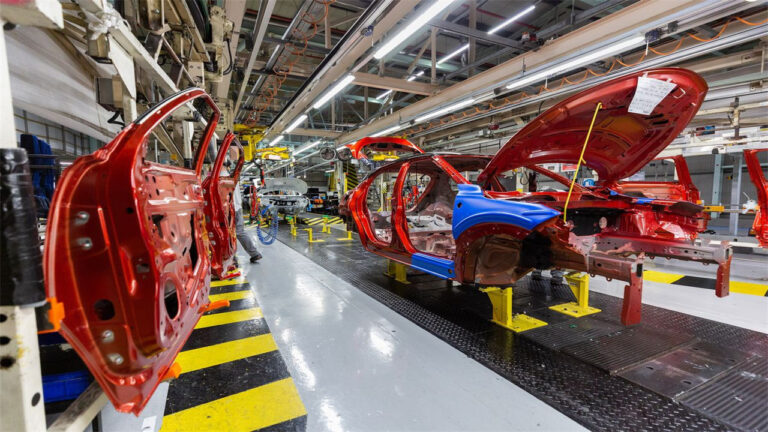
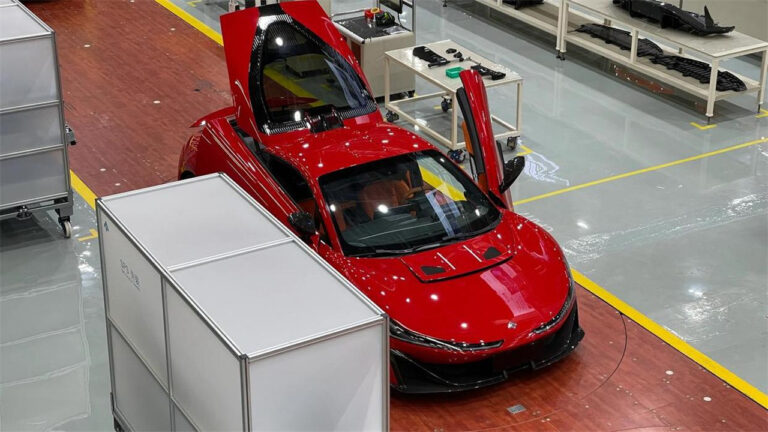
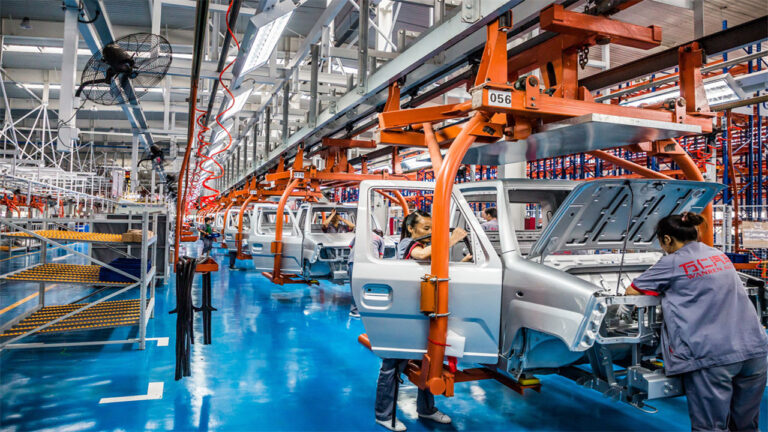
Main Characteristics of an SUV Production Line—Smart Production Line Factory

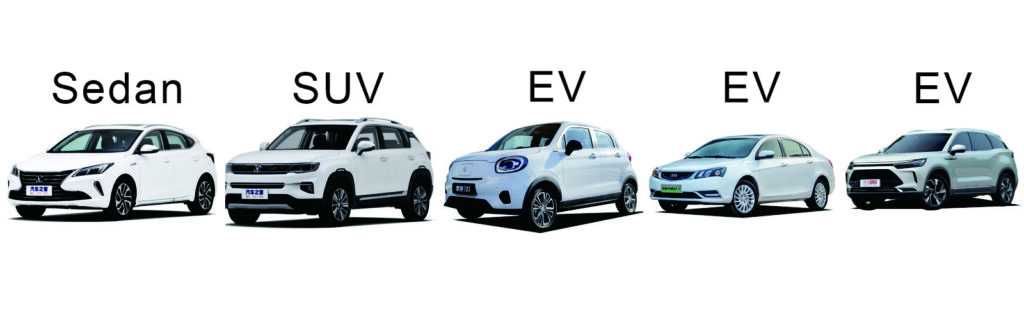
Automobile Production Lines/Assembly Lines are Suitable to Assemble/Produce 4 wheelers, Cars, Sedans, SUVs, Automobiles, EVs and so on.(Sometimes, suitable for Pickups production.)
The key features of an SUV production line can be summarized as follows. It represents a specialized enhancement based on modern automotive manufacturing technology, tailored to the specific characteristics of SUV products:
1. Hardware Upgrades Designed for “Large Size” and “High Rigidity”
- Large-Scale Tooling Equipment: Robots, welding fixtures, body carriers, etc., on the production line are larger in size and have higher load capacities to accommodate the larger and heavier SUV bodies.
- Reinforced Manufacturing Processes:
- More Weld Points and Structural Adhesive: Uses more welding points and broader application of structural adhesive to ensure the tall body has sufficient torsional stiffness and safety.
- Application of High-Strength Materials: Heavily utilizes high-strength steel and hot-formed steel. Stamping and welding equipment must be capable of processing these stronger materials.
2. Dedicated Assembly Processes Adapted for Complex Functions
- Four-Wheel-Drive System Integration: The production line has dedicated workstations for the precise installation of complex 4WD components like the propeller shaft, transfer case, and rear axle drive unit.
- Specialized Chassis and Suspension Installation: Uses specialized equipment for hoisting and tightening these large chassis components, tailored to the SUV’s more robust suspension system and higher ground clearance.
- Flexible Assembly for Diverse Configurations: To handle the wide range of customer options (e.g., off-road modes, traction control), the production line must possess extremely high flexibility to seamlessly switch between assembly tasks for different configurations.

3. Specialized Inspection Steps to Verify Off-Road Capability
This is one of the most distinctive features of an SUV production line, involving strict functional tests before the vehicles roll off the line:
- Steep Grade Test: Verifies the vehicle’s hill-climbing ability, hill-start assist system, and hill descent control function.
- Water Wading Test: Checks the sealing of the underbody to ensure good waterproof performance.
- Undulation Road Test: Tests body rigidity, suspension performance, and checks for abnormal noises on simulated rough roads.
- 4WD System Test: Simulates wheel slip on roller testers to ensure the 4WD and electronic limited-slip systems respond quickly and accurately.
4. Ultimate Flexibility and Mixed-Model Production Capability
To improve efficiency, SUVs are often produced on the same line as sedans, which requires the production line to have:
- Automatic Model Identification: Uses RFID or vision systems to automatically identify different models and call up the corresponding assembly program.
- Flexible Fixtures and Carriers: Employs fixtures and carriers that can automatically adjust to accurately secure and transport bodies of vastly different sizes.
- Precise Sequential Logistics: The logistics system must deliver the correct SUV or sedan parts to the corresponding workstation just-in-time and in the correct production sequence.
In summary, the main characteristics of an SUV production line are: “stronger” in hardware, “more complex” in processes, “more flexible” in management, and “more specialized” in quality inspection. It ensures that while production is efficient, the special requirements of SUV models regarding safety, functionality, and diversity are met.